Birdhouse dimensions calculator
Open lawn, pasture or field edge with scattered perches, facing an open area.
Drill 1/4 inch drainage holes in the floor corners and leave gaps under the roof for ventilation. Never add a perch: native cavity nesters do not need one, and it helps predators and house sparrows.
Hole size is the one number that matters most: it decides who can get in. A 1 1/2 inch hole admits bluebirds but excludes starlings; 1 1/8 inch excludes house sparrows. Sources: Cornell Lab NestWatch nest box tables and the U.S. Fish and Wildlife Service "Homes for Birds".
Ready-made boxes and mounting poles
Prices move constantly; the button shows the current figure.



Get the printable checklist
One page with every item, the placement distances and the cleaning schedule. We send it once. No sales sequence.
Used only to send the checklist.Frequently asked questions
What size hole does a bluebird house need?
Eastern bluebirds need a 1 1/2 inch round entrance hole, which is large enough for them and small enough to keep out European starlings. Western and mountain bluebirds are slightly larger and are usually given a 1 9/16 inch hole, which still excludes starlings. The hole centre sits 6 to 10 inches above the floor so nestlings are out of reach of a raccoon paw.
What are standard birdhouse dimensions?
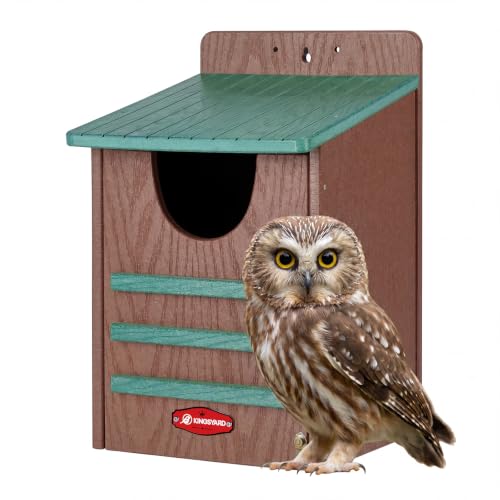
There is no single standard: size is set by the species. Small cavity nesters such as wrens and chickadees use a 4 x 4 inch floor and 8 to 10 inches of depth. Bluebirds and tree swallows use 5 x 5 inches. Woodpeckers, kestrels and screech-owls need 6 x 6 to 8 x 8 inch floors and 12 to 15 inches of depth. The entrance hole size matters most.
Should a birdhouse have a perch?
No. Native cavity-nesting birds cling to the entrance without one, and a perch gives house sparrows, starlings and predators such as raccoons and snakes something to hold while they reach inside. Nest box plans from wildlife agencies omit perches deliberately. A rough surface or a few saw kerfs below the hole on the inside helps fledglings climb out.
How high should a birdhouse be mounted?
Mounting height follows the species: bluebirds 4 to 6 feet, wrens and chickadees 5 to 15 feet, tree swallows 5 to 10 feet, woodpeckers and screech-owls 10 to 20 feet or higher, purple martins 10 to 20 feet on a telescoping pole. A smooth metal pole with a predator guard beats a tree or fence post, which cats and snakes can climb.
What wood is best for a birdhouse?
Untreated cedar, cypress or exterior-grade pine at about 3/4 inch thick is the standard. It insulates better than thin plywood or metal. Never use pressure-treated lumber and never paint or stain the inside. If you paint the outside, use a light colour so the box does not overheat in sun. Recycled plastic lumber boxes also work well.