Best Suet Feeder in 2026
A tail prop, a small extended perch below the suet cage, is the single feature that separates a good woodpecker suet feeder from a basic one, since woodpeckers naturally brace their tail against a surface while feeding. The Gbekery Double Suet Feeder adds a tail prop and double capacity for a fair price, our top pick over a simpler single-cage starter and a two-feeder premium set.

The short list
| Tier | Pick | Price | |
|---|---|---|---|
| Beginner | BBPECO Wooden Suet Bird Feeder for Outside Hanging | $15.19 | View |
| Intermediate | Gbekery Wooden Double Suet Feeder with Tail Prop for Outside | $26.99 | View |
| Expert | Kingsyard 2 Pack Double Tail-Prop Suet Bird Feeder | $39.99 | View |
BBPECO Wooden Suet Bird Feeder for Outside Hanging

The BBPECO Wooden Suet Feeder is a straightforward wooden single-cage suet feeder with a tail prop already built in, at the lowest price point that still gets the design right. It is a solid first suet feeder for anyone who wants to see if woodpeckers and other suet-eating birds are active in the yard before spending more.
Skip it if: Skip it if you already know woodpeckers or larger suet-eating birds visit often, since a single cage will need refilling more frequently than a double-capacity feeder.
Gbekery Wooden Double Suet Feeder with Tail Prop for Outside
The Gbekery Double Suet Feeder doubles the suet capacity of a single-cage feeder in one hanging unit, meaning fewer refill trips and room for two suet cakes at once, which matters in winter when suet gets eaten fastest. It is the buy-once pick for a feeder that keeps up with regular woodpecker and nuthatch visits.
Skip it if: Skip it if you only get occasional suet visitors, since a single-cage feeder will keep up fine with lighter traffic.
Kingsyard 2 Pack Double Tail-Prop Suet Bird Feeder

The Kingsyard 2-Pack Suet Feeder gives you two complete double tail-prop suet feeders in one purchase, the ceiling pick for anyone setting up multiple suet stations around the yard at once, whether to spread out feeding pressure or to cover both a front and back yard setup.
Skip it if: Skip the two-pack if you only need one feeding location, since a single Gbekery double feeder already covers most one-station yards.
Also worth a look
Other listings in the same category, spread from budget to premium.


What makes a suet feeder good for woodpeckers specifically?
Woodpeckers feed most naturally with their body vertical against a tree trunk, using their stiff tail feathers braced against the bark for support. A suet feeder with a tail prop, an extended wire or wooden perch below the suet cage, replicates that same posture and makes feeding noticeably easier and more comfortable for woodpeckers than a plain cage with no lower support. Every suet feeder we recommend here includes a tail prop for exactly that reason.
Downy, hairy and red-bellied woodpeckers are among the most common backyard visitors to a tail-prop suet feeder, and nuthatches and chickadees frequently share the same feeder without needing the tail prop themselves, since their feeding posture does not depend on it the way a woodpecker's does. Larger woodpeckers, like a pileated woodpecker, can also use a tail-prop feeder, though their size means they sometimes prefer a feeder mounted directly against a tree trunk over one hanging freely from a branch, since a fixed mount gives them a steadier surface to brace against.
Wooden or metal suet feeder: which lasts longer?
A metal cage suet feeder, like the iBorn Metal Suet Feeder, generally resists squirrel and raccoon chewing better than a wooden-frame feeder, since there is no wood surface for teeth to gain purchase on. A wooden-frame feeder like the BBPECO Wooden Suet Feeder tends to look more attractive in a garden setting and holds up fine against weather, but is more vulnerable if squirrels are determined to chew through the frame to reach the suet cage inside.
A recycled plastic frame, like the one used on the Gtongoko Recycled Plastic Suet Feeder, splits the difference: it resists chewing better than natural wood while still keeping a more traditional look than an all-metal cage, and it will not rot or warp the way a wooden frame eventually can after repeated wet seasons outdoors, all while staying lighter than an equivalent all-metal design.
How do I keep suet fresh in warm weather?
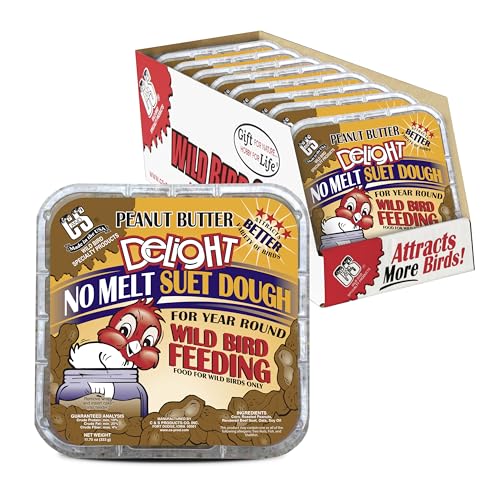
Raw suet goes rancid quickly in heat and can spoil or turn liquid on hot afternoons, which is unappetizing to birds and can create a mess on the feeder itself. Switch to a no-melt suet dough, like C&S No-Melt Suet Dough, once temperatures regularly climb into the warmer months, since it is formulated to hold its shape and stay palatable in conditions that would ruin a standard suet cake.
| Suet type | Best season | Notes |
|---|---|---|
| Standard raw suet cake | Cold weather | Highest energy, spoils fastest in heat |
| No-melt suet dough | Warm weather | Holds shape, does not liquefy in heat |
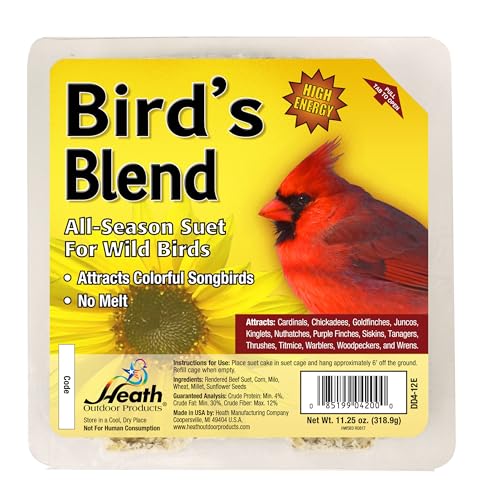
| Variety pack cakes | Year-round | Mixed formulas for different seasons and species |
Where should I hang a suet feeder?
Mount a suet feeder on a tree trunk, a dedicated pole, or hanging from a sturdy bracket at a height of roughly 5 to 8 feet, close enough to a tree or structure that woodpeckers feel comfortable approaching the way they would a natural tree surface. Suet feeders draw squirrel and raccoon interest just as readily as seed feeders, so the same pole distance and baffle guidance used for squirrel-proofing a seed feeder applies here as well, keeping the feeder at least 10 feet from a jumping launch point with any baffle set 4 to 5 feet up the pole.
Placing a suet feeder near, but not directly beside, a seed feeder is a common and effective setup, since it lets woodpeckers and nuthatches feed without competing for the same perches used by seed-eating birds, while still keeping your feeding station visually and physically manageable in one general area of the yard.
If mounting on a tree, use a hook or bracket rather than nailing directly into the trunk, which can damage the tree over time and create an entry point for pests and disease. Most suet feeders come with a simple hanging loop that works fine on a screw-in hook set into a lower, sturdy branch, which is a far gentler option for the tree over the long term.
How we chose
We did not test these suet feeders in person. This roundup is built from published product materials, capacity and tail-prop design, cross-checked against feeding behavior guidance for woodpeckers and other suet-eating species, along with a wide read of verified owner reviews on durability and squirrel resistance. We did not assume weight or dimension specs that were not clearly published by the manufacturer, and we treated any claim about which specific species visit a given feeder as a general pattern rather than a guarantee for every region. Capacity and dimension figures came directly from manufacturer listings rather than visual estimates from product photos.
Buying tips: choosing a suet feeder
Look for a hinged or removable cage front, which makes swapping out a suet cake far faster than a feeder that requires unhooking the entire unit from its mount. A roof or overhang above the suet cage helps keep rain out of the cage, which both protects the suet and keeps the feeder cleaner for longer between washes.
Clean any suet feeder every couple of weeks the same way you would a seed feeder, more often in wet weather, using a diluted bleach solution of roughly 1 part bleach to 9 parts water, then rinsing thoroughly and letting it dry before rehanging. Suet residue attracts the same mold and bacteria risks as leftover seed hulls if a feeder is never cleaned.
Consider capacity relative to how often you are willing to check the feeder. A single-cake feeder that runs out mid-week means empty suet sitting for days if you cannot check often, while a double-capacity feeder buys more time between refills for a busy household. Match the feeder to your realistic refill schedule rather than the lowest price alone, and adjust that schedule further once cold weather increases how quickly birds work through a full suet cake, sometimes emptying a feeder noticeably faster than the same feeder would in milder conditions.
A rust-resistant metal finish, or a fully weatherproof recycled plastic body, matters most if the feeder stays up year-round rather than being taken down between seasons. Check whether a metal cage feeder is coated or galvanized against rust before committing to leaving it outside through repeated wet winters, since an uncoated cage can corrode faster than expected in humid climates.
Get the one-page buying checklist
The three picks above, the placement distances and a cleaning schedule on one printable page.
Used only to send the checklist.Buy the picks
Prices move constantly; the button shows the current figure.
Frequently asked questions
What is a tail prop and why does my suet feeder need one?
A tail prop is a small wire or wooden perch extending below the suet cage that gives a woodpecker something to brace its stiff tail feathers against while feeding, mimicking how it naturally braces against a tree trunk. Feeders without a tail prop are still usable by woodpeckers, but a tail prop makes feeding noticeably more comfortable and can increase how often they visit.
How often should I replace suet in a feeder?
A single suet cake typically lasts one to two weeks under regular feeding pressure, faster in winter when energy demand and visitor traffic are both higher. Check suet more often in warm weather, since it can spoil or turn rancid in heat well before birds finish eating it, and replace it promptly if it looks discolored, moldy or liquefied.
Can squirrels get into a suet feeder?
A metal cage suet feeder resists squirrel chewing far better than a wooden-frame one, though a determined squirrel can still cling to the outside of either style and pick at suet through the cage openings. Mounting the feeder on a pole with proper squirrel-proofing distance and a baffle reduces squirrel access more reliably than the feeder material alone.
What birds eat suet besides woodpeckers?
Nuthatches, chickadees, titmice, wrens and even bluebirds regularly visit suet feeders, especially in cold weather when the high fat content provides valuable quick energy. Woodpeckers are the species suet feeders are most associated with, largely because the tail-prop design caters specifically to how they naturally feed, but they are far from the only visitors.
Should I use suet cakes or suet dough in summer?
Switch from standard raw suet cakes to a no-melt suet dough once temperatures regularly climb into warm afternoons, since raw suet can turn rancid or liquefy in heat. No-melt dough is formulated specifically to hold its shape and stay appealing to birds through warm weather, making it the safer choice for suet feeding outside of cooler months.