Feeding Birds in Winter
In winter, water is often harder for birds to find than food, since natural sources freeze while feeders can still be restocked. A thermostatically controlled heater like the GESAIL Bird Bath Heater keeps an existing bath ice-free without running constantly, and pairing that with high-fat foods and a sheltered feeder location covers the rest of what birds need to get through a cold stretch.

Why does a bird bath heater matter more than extra food?
Birds can usually find food across a broader area even in cold weather, but liquid water disappears fast once temperatures stay below freezing. A small submersible or in-bath heater keeps one reliable water source open, and that alone can concentrate more bird activity in a yard than any single feeder, since heated water is often the scarcest resource nearby.
What is the best heated bath option?
| Option | Best for |
|---|---|
| Submersible or deicer heater | Adding heat to a bath you already own |
| Full heated bird bath | Starting from scratch, or replacing a bath that will not fit a deicer |
A thermostatic model like the GESAIL Bird Bath Heater only draws power when the water actually approaches freezing, which keeps the electric bill down compared to a heater that runs continuously. Anyone without an existing bath can start with a complete unit like the 100W Heated Bird Bath for Outdoors instead. Either way, keep the water at 2 inches deep or less, which is the depth heated baths are generally built around.
What should birds be fed in winter?
High-fat, high-calorie foods go furthest in cold weather, since birds burn through energy fast just staying warm overnight. Suet, black oil sunflower seed, sunflower hearts and peanuts all outperform lower-fat seed like plain millet during a sustained cold stretch, and a feeder stocked with fat-dense food tends to see steadier winter traffic than one filled with filler seed.
Does suet need to change in winter versus summer?
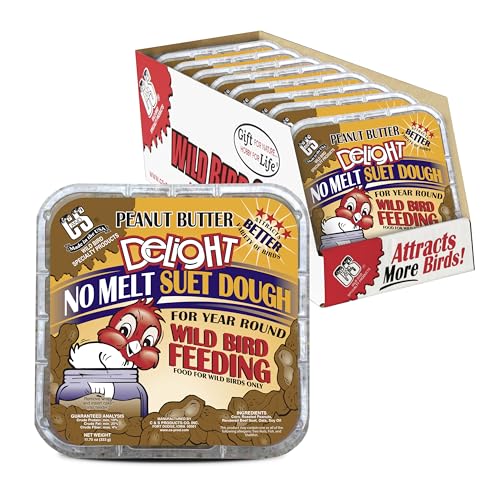
Raw suet that would turn rancid in summer heat holds up fine in freezing temperatures, and cold weather is actually when plain suet performs best. A no-melt suet dough like C&S Peanut Butter Delight No Melt Suet still helps during milder winter spells, or on a sunny, south-facing feeder spot where suet can soften during the warmest part of the day.
Gear for this job
Prices move constantly; the button shows the current figure.

What kind of suet feeder holds up in winter?
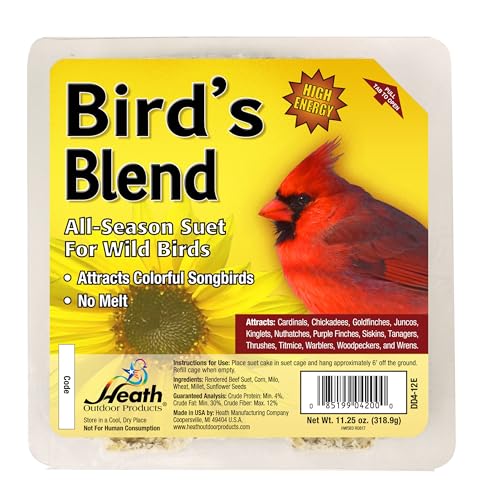
A metal cage feeder with a tail-prop, like the iBorn Metal Suet Feeder with Tail Prop, gives woodpeckers and nuthatches a stable perch in cold, windy conditions where a flimsier feeder swings too much to use comfortably. Stocking it with a Heath All Season High Energy Suet Cake, Case of 18 means it does not need refilling every few days during peak winter demand.
Where should feeders go in cold, windy weather?
Move or add feeders on the sheltered side of a structure, hedge or evergreen, where wind chill is lower. Birds spend more energy feeding in open wind and will favor a sheltered spot even if it means a slightly longer flight from cover, so a spot out of the prevailing wind often outperforms one that simply has more open sky.
Do feeders need to be cleaned more in winter?
Less often than in warm, wet weather, since mold and bacteria grow slower in cold temperatures. Wet snow and freeze-thaw cycles can still cake seed together, though, so check every 2 weeks and clear out any clumped or frozen seed so the feeding ports stay open and usable.
What you need
Prices move constantly; the button shows the current figure.

Get the printable checklist
One page with every item, the placement distances and the cleaning schedule. We send it once. No sales sequence.
Used only to send the checklist.Frequently asked questions
Do birds need a heated bird bath in winter?
Not strictly, but it helps more than most people expect, since liquid water is often scarcer for birds in winter than food is. A thermostatically controlled heater or deicer keeps an existing bath from freezing solid without running nonstop, and a reliable open water source in cold weather often draws more consistent activity than adding another feeder.
What is the best food to put out for birds in winter?
High-fat foods go furthest in cold weather: suet, black oil sunflower seed, sunflower hearts and peanuts all give birds more energy per bite than lower-fat seed like plain millet. Birds burn through calories fast overnight just staying warm, so a feeder stocked with fat-dense food tends to see steadier winter traffic than one with filler seed.
Does suet go bad in cold weather?
No, cold temperatures are actually when plain suet performs best, since the fat stays firm and does not turn rancid the way it can in summer heat. A no-melt suet dough is more useful for a sunny, south-facing spot where the feeder warms up during the day, or for the shoulder seasons before and after the coldest stretch.
Where should a bird feeder go in winter?
Place it on the sheltered side of a structure, hedge or evergreen, out of direct wind, since birds spend extra energy feeding in open wind and will favor a calmer spot even if it means a slightly longer flight from cover. A sheltered location also keeps snow and ice from building up in the feeding ports as quickly.
How often should a winter feeder be cleaned?
Roughly every 2 weeks, similar to other seasons, since cold temperatures slow mold and bacteria growth compared to warm, wet weather. Watch for clumped or frozen seed after snow or freeze-thaw cycles, since that can block feeding ports even when the feeder does not otherwise look dirty, and clear it out before it refreezes.