Best Bird House Camera in 2026
A bird house camera turns an ordinary nest box into a live view of eggs hatching and nestlings fledging, and solar charging plus night vision are the two features that matter most for uninterrupted viewing. The Solar Nest Box Camera 1080P/2K covers both at a fair price, our top pick over a lighter entry model and a premium metal-clad option.

The short list
| Tier | Pick | Price | |
|---|---|---|---|
| Beginner | Smart Bird House with Camera, 5MP HD Camera Solar Powered Bird Nest | $46.41 | View |
| Intermediate | Birdhouse Camera, Solar Powered 1080P/2K HD Smart Nest Box | $69.99 | View |
| Expert | Birdfy Bird House with Camera Solar Powered with Metal Cladding for | $139.99 | View |
Smart Bird House with Camera, 5MP HD Camera Solar Powered

The Solar Bird House Camera 5MP pairs a 5MP camera with solar charging in a complete nest box unit at the lowest entry price for the category, a reasonable way to try nest-box viewing without a large upfront cost.
Skip it if: Skip it if night viewing matters to you, since this is a daytime-focused entry model without the low-light performance of the pricier options.
Birdhouse Camera, Solar Powered 1080P/2K HD Smart Nest Box
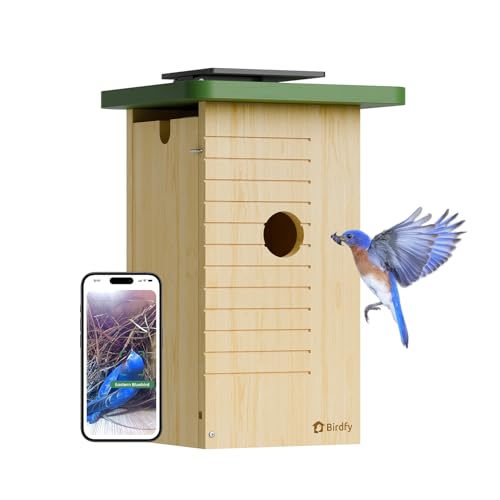
The Solar Nest Box Camera 1080P/2K adds night vision to sharp 1080P/2K daytime video, so you can watch overnight incubation and early morning feeding without any gaps, and solar charging means it keeps running through a nesting season without pulling it down to recharge.
Skip it if: Skip it if you want the most rugged, weatherproof housing available, since the premium metal-clad option below is built for harsher, longer-term outdoor exposure.
Birdfy Bird House with Camera Solar Powered with Metal

The Birdfy Bird House Camera (Metal Cladding) uses a metal-clad exterior for more durable, longer-lasting weather resistance than the plastic housings used on most nest box cameras, from a brand with a strong track record specifically in smart bird camera products. It is the ceiling pick for a permanent, multi-season installation.
Skip it if: Skip it if you plan to move or reposition the camera between seasons, since the metal housing adds weight and bulk over the lighter plastic models.
Also worth a look
Other listings in the same category, spread from budget to premium.


What features actually matter in a bird house camera?
Solar charging is the single biggest quality-of-life feature, since a nest box is often mounted somewhere inconvenient to reach, and pulling a camera down every few days to recharge a battery risks disturbing an active nest. Night vision matters almost as much, since incubation and early hatching activity happen around the clock, not just during daylight hours. Resolution matters less than these two features for most owners, since even a modest resolution camera gives a genuinely engaging view of nesting behavior most people never otherwise see.
| Feature | Why it matters |
|---|---|
| Solar charging | No battery swaps at a hard-to-reach mounted box |
| Night vision | Covers overnight incubation and early hatching activity |
| Weatherproof housing | Survives rain, heat and cold across a full nesting season |
| App motion alerts | Notifies you the moment a bird enters or activity starts |
Does a nest camera disturb or scare off nesting birds?
Most nest box cameras are built into the interior or roof of the box itself, out of sight from the entrance hole, and established nesting pairs generally habituate to the camera's presence quickly since it produces no visible light, motion or sound from inside a properly installed unit. Installing the camera before birds have chosen the box, rather than adding it to an already active nest, reduces any chance of disturbance during the more sensitive early nest-building and egg-laying period.
Choose the entrance hole size and box dimensions for whichever species you are hoping to attract before worrying about the camera itself, since a camera-equipped box that is the wrong size for the target species will simply sit empty regardless of how good the camera is. Match hole size to species the same way you would for a standard, camera-free nest box.
Bluebirds, wrens, chickadees and tree swallows are among the cavity-nesting species most commonly reported using camera-equipped boxes, since these are also the species that most readily accept a standard nest box in the first place. A camera does not open up new species that would not otherwise use a given box design and hole size.
Do I need WiFi at the birdhouse location to use a nest camera?
Yes, essentially every smart bird house camera streams over your home WiFi network to a companion phone app, so the box needs to sit within reasonable WiFi range or within range of a mesh extender. If your intended nest box location is far from your router, check the current WiFi range specifications for a given model before buying, since range varies between products and through obstructions like exterior walls.
A dedicated WiFi extender or a mesh network satellite placed somewhere between the router and the nest box is a reasonable solution for a box mounted at the edge of your property, and it is generally a cheaper fix than assuming you need a more expensive camera model with a longer advertised range.
Test signal strength at the exact mounting spot before finalizing installation, using a phone's WiFi signal indicator as a rough guide, rather than assuming coverage based on distance alone, since walls, metal siding and even dense foliage can all weaken a signal more than raw distance would suggest, especially once summer leaf cover fills in between the box and the router.
What can I actually expect to see through a nesting season?
A typical nesting cycle runs from initial nest building through egg laying, incubation, hatching and finally fledging over the course of several weeks, and a camera-equipped box captures every stage of that if it stays powered and connected the whole time. Many owners report that the hatching window and the first days of feeding nestlings are the most consistently watched moments, since that is when visible activity is highest and most dramatic.
It is worth setting expectations honestly: not every box that gets a camera installed ends up with a nesting pair in a given season, the same way any nest box can sit unused for a while even with perfect placement. Installing the camera does not change the odds of attracting a nesting pair either way, since birds respond to hole size, location and predator protection, not to the presence of electronics inside the box.
How we chose
We did not test these bird house cameras in person. This roundup is built from published camera resolution, power source and housing material specifications, along with a wide read of verified owner reviews describing real-world nesting footage, WiFi reliability and battery or solar performance across a full season. Subscription and app features change over time, so check the current plan and app requirements directly with the manufacturer before buying rather than relying on older reviews for that detail. We also cross-checked general nest box mounting guidance against the same wildlife agency and conservation sources used throughout this site, and we did not carry over resolution or range claims from one model to a similarly named one without verifying the specific listing. Housing material and weatherproofing claims were checked against the manufacturer's own product description rather than inferred from photos alone, and any resolution figure quoted here matches the specific listing referenced rather than a general product line claim.
Buying tips: setting up a bird house camera
Mount any nest box camera the same way you would a standard bluebird or wren house, matching entrance hole size to your target species and following the same predator-guard and pole placement guidance, since the camera is a feature added to a nest box, not a replacement for proper nest box fundamentals. See our smart bird feeder camera setup guide, which covers the same WiFi pairing and app setup steps that apply to a nest box camera as well.
Check the current subscription plan details before you buy if cloud video storage or advanced AI species identification matters to you, since app features and subscription terms are updated by manufacturers over time and vary between models even within the same brand.
Battery backup is worth checking even on a solar model, since several cloudy days in a row can draw down a battery faster than the panel recharges it. A camera with a larger backup battery capacity rides out a stretch of poor sun far more reliably than one that depends on daily direct sunlight to stay powered, which matters most in regions with long overcast stretches.
Get the one-page buying checklist
The three picks above, the placement distances and a cleaning schedule on one printable page.
Used only to send the checklist.Buy the picks
Prices move constantly; the button shows the current figure.
Frequently asked questions
Do bird house cameras need a subscription?
Some models offer optional paid tiers for extended cloud video storage or advanced features, while basic live viewing and local clip saving are commonly included free with the camera. Subscription terms and pricing change over time and vary by brand, so check the current plan details directly on the manufacturer page before buying if this matters to your decision.
Will a solar-powered nest camera work in a shaded yard?
Solar charging performance depends on how much direct sun the panel receives daily, so a nest box in heavy, consistent shade may not fully recharge the camera through solar alone. Positioning the box, and its solar panel, to catch at least a few hours of direct sun daily gives the most reliable performance, and most models can still be manually charged as a backup.
Can I install a camera in an existing birdhouse I already own?
Some standalone nest box cameras are designed to retrofit into an existing box, but most of the models in this roundup are sold as complete nest box and camera units built together, which simplifies weatherproofing and camera positioning. Check a specific listing for retrofit compatibility if you want to keep an existing birdhouse rather than replace it.
Does a nest camera scare away birds from using the box?
Generally no, since the camera itself produces no visible light, sound or motion from inside a properly installed unit, and birds show no more hesitation around a camera-equipped box than a standard one in most reported experiences. Installing the camera before a nesting pair has already committed to the box, rather than adding it mid-nest, is the safer approach.
What resolution do I actually need for a bird house camera?
1080P is genuinely sufficient for an engaging, detailed view of nesting activity on a phone screen, and higher resolutions like 2K or 4K mainly add clarity if you plan to zoom in digitally or view on a larger screen. Night vision quality and solar reliability matter more day to day than chasing the highest resolution number available.