The best bird feeder and seed for purple finches
Like house finches but raspberry-coloured and more of a forest bird. Sunflower hearts in a tube bring purple finches in when house finches are thin on the ground.

Which feeder types do purple finches use?
| Feeder | Holds | Squirrels | Notes |
|---|---|---|---|
| Tube feeder | Sunflower, hearts, mixes | Poor unless caged or weight-activated | The workhorse for small clinging birds. Metal ports resist squirrel chewing. |
| Hopper feeder | Sunflower, safflower, mixes | Poor unless weight-activated or baffled | A house-shaped reservoir with a wide ledge. The best all-round feeder for cardinals. |
| Platform or tray feeder | Anything | None at all | Draws the widest range of species, including ground feeders. Needs a mesh floor for drainage and daily cleanup. |
Feeders purple finches use, budget to premium
Prices move constantly; the button shows the current figure.


What seed do purple finches like best?
| Food | Why | Storage |
|---|---|---|
| Black oil sunflower | High oil content and a thin shell make it the widest-appeal seed there is. Most feeder birds in most of North America eat it. | Keeps well for months in a sealed metal can |
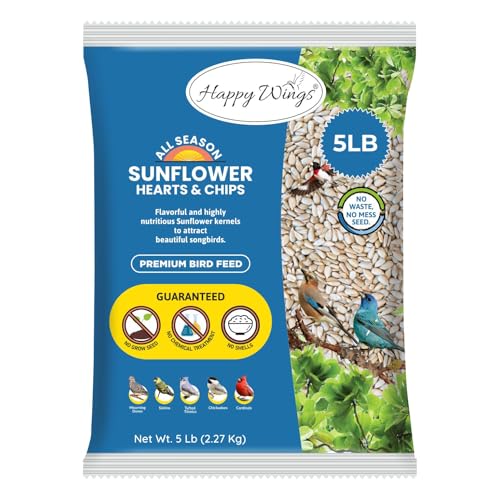
| Sunflower hearts and chips | Costs more per pound but nothing is wasted as shell weight, and nothing sprouts under the feeder. The best choice over a patio or deck. | Spoils faster; buy what you use in a few weeks |
| Nyjer (thistle) | Not related to thistle despite the name. Imported nyjer is heat-treated so it does not sprout. Needs a feeder with tiny ports or mesh or it pours out. | Goes stale in weeks; buy small bags |
Food to buy for purple finches
Prices move constantly; the button shows the current figure.


Where and when should you feed purple finches?
- Height and spot: 5 feet.
- When: Winter visitors in much of the East.
- Range: North and Pacific coast.
- Feeding style: Feeds at hanging feeders; a pole with a baffle keeps squirrels off without bothering them.
The same setup also brings cardinals, blue jays, goldfinches, house finches and chickadees, which use the same feeder types.
Feeders for other birds
Cardinals · Blue Jays · Goldfinches · House Finches · Chickadees · Titmice · Nuthatches · Woodpeckers · Bluebirds · Wrens · Orioles · Hummingbirds · Mourning Doves · Juncos · Native Sparrows · Towhees · Grosbeaks · Robins · Mockingbirds · Pine Siskins · Redpolls · Keeping starlings and grackles away · Red-bellied Woodpeckers · Downy Woodpeckers · Cedar Waxwings · Quail
Get the purple finches feeding checklist
Feeder, seed, height and cleaning schedule for purple finches on one printable page.
Used only to send the checklist.Frequently asked questions
What is the best bird feeder for purple finches?
A tube feeder is the most reliable choice for purple finches. Like house finches but raspberry-coloured and more of a forest bird. Pair it with black oil sunflower, place it 5 feet, and keep it clean every two weeks. A second feeder type such as a hopper feeder widens the appeal without adding much work.
What do purple finches eat at feeders?
In order of preference: black oil sunflower, sunflower hearts and chips and nyjer (thistle). High oil content and a thin shell make it the widest-appeal seed there is. Most feeder birds in most of North America eat it. Offer one food per feeder rather than a mix, so birds are not flicking unwanted grains onto the ground to get at the one they want.
Where should I put a feeder for purple finches?
5 feet. Keep it within 3 feet of a window or beyond 30 feet to avoid collisions, at least 10 feet from anything a squirrel can jump from, and 10 to 12 feet from dense shrubs so purple finches can reach cover without cats being able to ambush them.
When do purple finches come to feeders?
Winter visitors in much of the East. Range: North and Pacific coast. Keep feeders stocked and clean through the season purple finches are present in your area, since a feeder that is empty for several days is often abandoned for a neighbour's.
Do purple finches use birdhouses?
No. Purple finches build open nests in shrubs, trees or on the ground and do not use enclosed nest boxes. Dense native shrubs, brush piles and leaving leaf litter in place do far more for them than any structure.