Best Window Bird Feeder in 2026
A window feeder trades capacity for the closest possible view of feeding birds, so suction hold and glass contact matter more here than in any other feeder style. The DY-SKTY Window Feeder holds more securely than a basic four-cup model, our top pick over an entry-level option and a heavier-duty premium design.
The short list
| Tier | Pick | Price | |
|---|---|---|---|
| Beginner | BPYOT Clear Acrylic Window Bird Feeder for Outside with 4 Strong | $15.99 | View |
| Intermediate | Clear Window Bird Feeder with 5 Extra Strong Suction Cups | $16.95 | View |
| Expert | Window Bird Feeder with Strong Suction Cups | $29.99 | View |
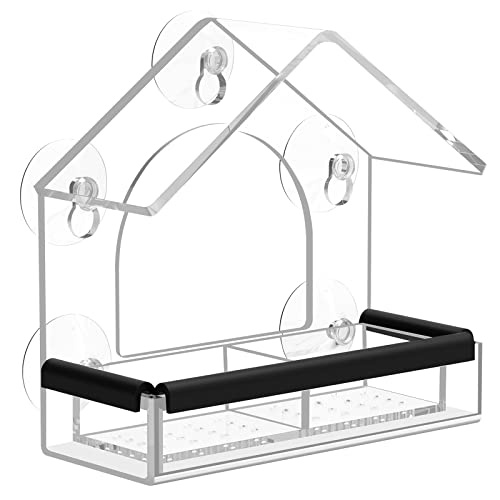
BPYOT Clear Acrylic Window Bird Feeder for Outside with 4

The BPYOT Clear Window Feeder uses four strong suction cups and a clear acrylic body to give an unobstructed view of feeding birds from inside, at the lowest entry price for the style. It is a simple, low-commitment way to try window feeding on a single pane of glass.
Skip it if: Skip it if your window sees strong, direct wind exposure regularly, since a fifth suction point adds real security in gusty conditions.
Clear Window Bird Feeder with 5 Extra Strong Suction Cups
The DY-SKTY Window Feeder adds a fifth suction cup for meaningfully more secure glass contact than a standard four-cup design, reducing the chance of the feeder shifting or falling in wind. It is the buy-once pick for a window feeder you can leave mounted through varied weather.
Skip it if: Skip it if you specifically want the maximum available suction strength for a very exposed or high window.
Window Bird Feeder with Strong Suction Cups
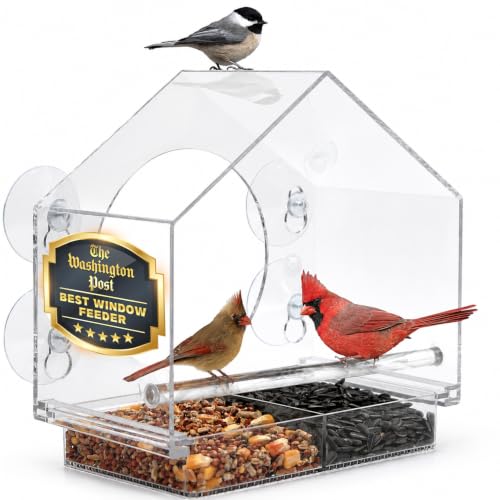
The Heavy-Duty Suction Window Feeder uses the strongest suction cup mounting available in this category, the ceiling pick for a window that gets direct wind, is mounted higher up, or simply where you want the most peace of mind that the feeder will not detach.
Skip it if: Skip it if your window is sheltered and low, since either lighter feeder above will hold fine in calmer conditions.
Also worth a look
Other listings in the same category, spread from budget to premium.


Will a window feeder cause more bird strikes on my glass?
A well-placed window feeder can actually reduce collisions rather than cause them, because it changes how birds perceive the window entirely. American Bird Conservancy guidance notes that feeders within about 3 feet of glass tend to result in fewer, gentler collisions than feeders placed farther away but still within flight range, since birds at a feeder directly on the glass have little room to build up dangerous speed before reaching it, and they perceive the glass as a solid surface up close rather than reflected open sky.
Feeders placed in the riskier middle zone, roughly 3 to 30 feet from a window, are the ones most associated with high-speed strikes, since birds have enough room to reach full flight speed while still misreading the glass as open space.
If you have an existing feeder in that riskier middle zone and are considering a window feeder as a replacement rather than an addition, moving feeding activity directly onto the glass is one of the more effective single changes you can make for reducing strikes at that location, alongside adding window decals for any remaining problem panes elsewhere on the house.
What is the best seed for a window feeder?
A no-mess seed like Audubon Park Sunflower Hearts is worth the higher price for a window feeder specifically, since a small platform sitting right against your glass makes hull mess and shell debris far more visible and harder to ignore than the same mess under a feeder out in the yard. Shelled seed also means less waste, since a window feeder's small capacity fills up faster with hulls than with the birds actually eating.
| Seed choice | Mess level on glass | Notes |
|---|---|---|
| Sunflower hearts (shelled) | Low | No hull debris, appeals to almost every species |
| Black oil sunflower (in shell) | Moderate | Cracked hulls collect on the sill and platform |
| Mixed seed with filler | High | Uneaten filler seed piles up and can mold if damp |
How do I keep a window feeder from falling off?
Clean the glass thoroughly with a plain water and vinegar solution before attaching any suction cup feeder, since dust, pollen and window cleaner residue all reduce suction hold significantly. Press each cup firmly and check the seal, and in very cold weather, warm the cups slightly before attaching, since suction rubber can lose flexibility and hold less securely in freezing temperatures.
A feeder positioned lower on the pane, rather than up near the top of a tall window, also puts less leverage strain on the suction cups from wind gusts, since the same gust pushes with less torque on a feeder mounted closer to the sill than one mounted high up an exposed pane.
Will birds actually feed that close to a window?
Yes, once a feeder is established, birds habituate to close human proximity from inside the glass fairly quickly, since the barrier itself keeps them safe from actual contact even when a person is clearly visible just a few feet away. It commonly takes anywhere from a few days to a couple of weeks for the first birds to discover and trust a new window feeder, so give a newly mounted feeder time before assuming the location or seed choice is the problem.
Sudden, quick movement right against the glass is more likely to startle a feeding bird than a person simply sitting still nearby, so moving slowly near a window feeder, especially in the first weeks after mounting it, helps birds build trust in the spot faster.
Chickadees, house finches and sparrows are commonly reported as some of the quickest species to accept a new window feeder, likely because they are already accustomed to feeding at close, active backyard feeders elsewhere. More cautious species may take a bit longer to approach a spot this close to a house, and some may never fully adjust regardless of how long the feeder stays up. Watching which species do settle in over the first few weeks is itself part of the appeal of a window feeder, since it gives a clear, close read on exactly which birds are comfortable in your specific yard, often revealing regular visitors you never noticed at a feeder further out in the yard.
How we chose
We did not test these window feeders in person. This roundup is built from published suction cup counts, capacity and material specifications, cross-checked against American Bird Conservancy guidance on feeder placement and window collisions, along with a wide read of verified owner reviews on suction hold through wind and weather. We left out any feeder without clearly published suction cup specifications, and we did not assume a specific maximum wind rating for any model unless the manufacturer stated one directly. Collision risk guidance was drawn directly from published conservation group placement recommendations rather than general assumption.
Buying tips: getting the most from a window feeder
A one-way mirrored film or a small piece of screening on the glass just above the feeder helps birds see you moving inside less clearly, which can make them more comfortable feeding at close range. Clean the feeder itself every 2 weeks with a diluted bleach solution, roughly 1 part bleach to 9 parts water, followed by a full rinse, since a window feeder's small size means seed and droppings build up in close view faster than in a larger yard feeder.
Finally, check the current suction cup condition every few months. Suction rubber degrades with UV exposure over time, and a cup that has lost its grip is the single most common reason a window feeder eventually falls.
A lower window, at or near eye level from a chair or kitchen counter, tends to get watched far more consistently than a high window that requires standing and craning to see, so pick the pane you actually pass by often rather than whichever window has the clearest outdoor sight line if the two are different.
Removing screens from the mounting pane, if your window has them, is usually necessary for a suction cup to seal properly against bare glass. Reinstall the screen on the sections of the window you still open regularly, and mount the feeder specifically on a fixed, non-opening pane where possible to avoid removing and reattaching it every time you open the window, which also reduces wear on the suction cups themselves over time.
Get the one-page buying checklist
The three picks above, the placement distances and a cleaning schedule on one printable page.
Used only to send the checklist.Buy the picks
Prices move constantly; the button shows the current figure.
Frequently asked questions
Do window bird feeders cause window strikes?
A feeder mounted directly on or within about 3 feet of the glass tends to reduce collision risk rather than increase it, since birds have little room to reach dangerous flight speed before the window and perceive the glass as solid up close. The riskier zone for strikes is roughly 3 to 30 feet from a window, where birds can build up speed while still misreading glass as open sky.
How do I clean a window bird feeder?
Clean the feeder body every 2 weeks, or weekly in wet weather, with a diluted bleach solution of about 1 part bleach to 9 parts water, then rinse thoroughly and let it dry before refilling. Clean the glass around the mounting cups periodically as well, since dust and residue there both reduce suction hold and make the view less clear.
Will suction cups damage my window?
No, suction cups designed for window feeders do not damage properly maintained glass, since they hold through air pressure alone rather than any adhesive or chemical bond. Over long periods a cup can occasionally leave a faint temporary ring from accumulated pressure and moisture, which typically wipes away easily with standard glass cleaner. Rotating the mounting spot on the glass every so often also helps avoid any lasting mark from long-term suction contact.
How many birds can feed from a window feeder at once?
Most window feeders are sized for one or two small birds at a time, since the platform is intentionally compact to keep suction cup mounting secure. This is a tradeoff of the format: a window feeder favors an up-close view over the volume a larger hanging or pole-mounted feeder can serve.
What is the best seed to use in a window feeder?
A shelled or no-mess seed like sunflower hearts works especially well in a window feeder, since it produces far less hull and shell debris right against your glass than seed in the shell, and it appeals to almost every backyard species. Standard black oil sunflower also works, but expect more visible hull buildup on the small platform.