Best Spotting Scope for Birding in 2026
A spotting scope earns its place once binoculars stop being enough, for scanning open water, distant fields or a raptor perched far up a ridge. The Vortex Diamondback HD 16-48x65 is our top pick for the range it covers, while a Celestron entry model and the Celestron Regal M2 100ED bracket the budget and premium ends.

The short list
| Tier | Pick | Price | |
|---|---|---|---|
| Beginner | Celestron LandScout 12-36x60 Angled Spotting Scope for Travel & | $109.95 | View |
| Intermediate | Vortex Diamondback HD Spotting Scope 16-48x65 Angled | $399 | View |
| Expert | Celestron Regal M2 100ED Spotting Scope with Zoom Eyepiece for | $881.99 | View |
Celestron LandScout 12-36x60 Angled Spotting Scope for
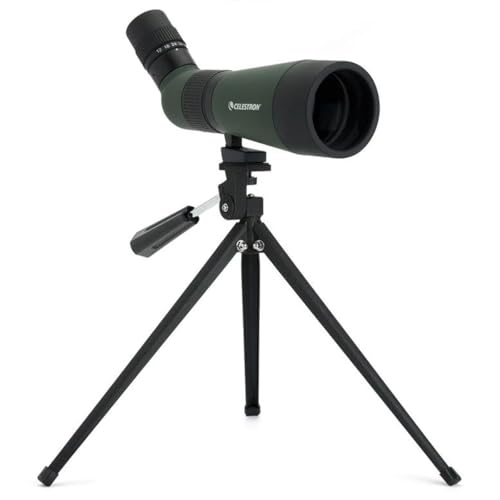
The Celestron LandScout 12-36x60 is an angled spotting scope from an established optics brand at an entry price, making it a reasonable way to try scope birding before committing to a bigger purchase. Its 60mm objective lens is a real step up in reach and light gathering over any binocular.
Skip it if: Skip it if you plan to bird watch in low light at the edges of the day often, since entry-level glass and coatings dim noticeably faster than mid-range or premium optics as light fades.
Vortex Diamondback HD Spotting Scope 16-48x65 Angled
The Vortex Diamondback HD 16-48x65 is the buy-once pick. HD glass and a 65mm objective lens give a noticeably brighter, sharper image than entry-level scopes, and Vortex's lifetime warranty covers the scope against accidental damage, which matters for a piece of gear that regularly rides on a tripod in the field.
Skip it if: Skip it if your budget is firm and entry-level, since the Celestron LandScout above covers the same core function for meaningfully less.
Celestron Regal M2 100ED Spotting Scope with Zoom Eyepiece

The Celestron Regal M2 100ED is the premium ceiling here, with a large 100mm ED glass objective lens that pulls in far more light than any other scope in this roundup. It is built for birders who spend serious time scanning distant waterfowl, shorebirds and raptors and want the sharpest, brightest image available at range.
Skip it if: Skip the Regal M2 100ED if you mostly bird watch at moderate range or from a backyard, since its size and weight are built for open-country scanning, not quick casual use.
Also worth a look
Other listings in the same category, spread from budget to premium.


When do I actually need a spotting scope instead of binoculars?
A spotting scope earns its keep once you are regularly trying to identify birds at distances beyond what any binocular can resolve clearly, typically across open water, a large field, a mudflat at low tide, or up at a raptor perched on a distant snag. Binoculars remain the better tool for anything closer and for any moving target, since a scope's narrow field of view and mounted setup make it slow to find a bird that is actively flying or hopping through branches.
A common approach among shorebird and waterfowl watchers is to scan first with binoculars to find activity, then set up the scope on the same spot once a bird of interest is holding still, since a scope's zoom and reach reward a stationary subject far more than they help with anything moving quickly. Backyard feeder watching rarely calls for a scope at all, since feeder distances are already well within binocular range.
See our full binoculars vs spotting scope comparison for a closer look at which tool fits which kind of birding.
How much zoom and objective lens size do I need?
Most birding scopes zoom somewhere in the 15x to 60x range, and more zoom is not automatically better, since image brightness and steadiness both drop as magnification climbs. A wider objective lens helps offset that by gathering more light at the higher end of the zoom range.
| Objective lens | Typical zoom range | Best for |
|---|---|---|
| 60mm | 12-36x | Entry-level, moderate distance, lighter to carry |
| 65mm | 16-48x | General all-purpose birding scope |
| 80-100mm | 20-60x | Long-range waterfowl, shorebirds, low-light performance |
Weight and carrying bulk scale up with objective lens size, so a 100mm scope is a meaningfully bigger and heavier commitment to carry on a long walk than a 60mm or 65mm scope. Many birders who do both short local outings and dedicated long-distance sessions keep a lighter scope for regular use and reserve a large-objective scope for planned trips to open water or known shorebird sites, rather than carrying the biggest scope everywhere by default.
Angled or straight spotting scope: which is better for birding?
An angled eyepiece, where you look down into the scope at a 45 degree angle, is generally preferred for birding because it lets a shorter tripod work for a group of different heights and is more comfortable for scanning upward at a bird in a tree or on a ridge. A straight scope points directly at the subject and can be faster to aim at something you can already see, which some birders prefer for waterfowl scanning across a flat horizon. Either works well; the angled design is simply the more common default for dedicated birders.
Group birding outings, like a guided walk or a club field trip, are a good example of where an angled scope shows its advantage clearly, since everyone from a child to a tall adult can look through the same eyepiece at roughly the same tripod height, just by adjusting where they stand rather than re-leveling the whole tripod for each viewer.
Do I need a special tripod for a spotting scope?
Yes, a sturdy tripod is not optional. At the magnifications a spotting scope runs, even small hand tremors make the image unusable, so scopes are designed to be tripod-mounted rather than handheld. A dedicated model like the 69-inch spotting scope tripod extends tall enough for standing use and includes a binocular adapter plate, letting the same tripod double as a steady mount for a full-size binocular during long stationary watches.
A fluid or smooth-panning tripod head matters almost as much as the legs themselves, since tracking a slow-moving bird like a soaring raptor at high zoom requires gentle, controlled movement rather than the jerky adjustments a cheap ball head tends to produce. If a scope purchase does not already include a head built for that kind of smooth tracking, factor a compatible head into the total budget rather than treating it as optional.
Leg material also affects how stable a setup feels in wind. Aluminum legs are lighter to carry but transmit more vibration in gusty conditions than a heavier, more rigid tripod, which is a real tradeoff to weigh if you regularly scope in open, exposed locations like a shoreline or a ridge line.
How we chose
We did not test these spotting scopes in person. This roundup draws on published objective lens sizes, zoom ranges and manufacturer documentation, along with a wide read of verified owner reviews covering image quality, focus speed and field durability. We left out any spec, such as exact field of view at each zoom step, that was not consistently published across the manufacturer's own listings. Warranty terms were checked directly against manufacturer statements rather than assumed from brand reputation alone.
Buying tips: choosing a spotting scope for birding
Prioritize the objective lens size over the top-end zoom number on the box. A 20-60x80 scope sounds impressive, but the true limiting factor for a bright, usable image at the high end of that range is how much light the 80mm lens can gather, not the magnification itself. ED, or extra-low dispersion, glass reduces color fringing around high-contrast edges like a bird against bright sky, and it is worth paying for if you scope regularly rather than occasionally.
Finally, budget for the tripod as part of the purchase, not as an afterthought. A scope that outperforms its tripod will still produce a shaky, frustrating image, since the tripod is what actually determines how steady your view is at high zoom.
Check how the eyepiece attaches before buying if you plan to use the scope for digiscoping, taking photos or video through the eyepiece with a phone. Some scopes use a fixed eyepiece while others accept interchangeable eyepieces, and a dedicated phone adapter designed for the specific eyepiece diameter makes a meaningful difference in image quality over simply holding a phone up to the lens by hand.
Also plan for a padded carrying case or harness if the scope will travel with you regularly. A scope and tripod combination is a meaningful amount of gear to carry, and a dedicated case protects the objective lens and eyepiece from scratches and impacts far better than tossing the bare scope into a general daypack alongside other equipment, especially across repeated trips over rough terrain.
Get the one-page buying checklist
The three picks above, the placement distances and a cleaning schedule on one printable page.
Used only to send the checklist.Buy the picks
Prices move constantly; the button shows the current figure.
Frequently asked questions
Is a spotting scope better than binoculars for bird watching?
Neither replaces the other; they serve different distances. Binoculars are faster to aim and better for finding and following moving birds at moderate range, while a spotting scope reaches much farther for stationary birds like distant shorebirds, waterfowl or a perched raptor. Most serious birders eventually own both rather than choosing one over the other.
What magnification is best for a birding spotting scope?
A zoom range around 15-45x or 20-60x covers the vast majority of birding situations, letting you start at a wider, brighter view to find the bird and zoom in for identification once it is centered. Fixed magnifications above 60x become difficult to use handheld or in anything but perfectly still air, since heat shimmer and any vibration are magnified along with the bird.
Do I need a tripod for a spotting scope?
Yes, always. Spotting scopes are designed around tripod use, and the magnification levels involved make a handheld image unusably shaky. Budget for a sturdy tripod as part of the purchase, since an otherwise excellent scope on a flimsy or overly short tripod will still produce a frustrating, unstable image in the field.
Angled or straight spotting scope, which should I buy?
Angled scopes are the more common choice for birding because the eyepiece angle makes it easier to share the view across people of different heights on one tripod and is more comfortable when scanning upward. Straight scopes can be quicker to point directly at something you can already see, which some birders prefer for flat, open-water scanning.
How far can a spotting scope see for bird watching?
Practical birding identification distance depends more on atmospheric conditions like heat shimmer than on the scope itself, but a quality 60-80mm scope at moderate zoom can resolve field marks on a bird several hundred yards away in good light, well beyond what any binocular can manage clearly at the same distance.