Best Oriole Feeder
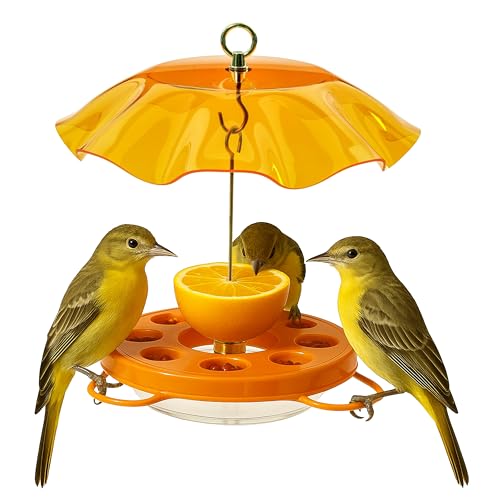
Orioles are drawn to feeders in three main ways: grape jelly, orange halves, and nectar, and the best feeders make it easy to offer more than one at once since individual orioles can have different preferences. The Birds Choice Oriolefest Oriole Feeder covers all three in a single feeder at a reasonable price. A cheaper jelly-and-orange feeder below is a fine way to start, and a slightly larger premium option adds more capacity for a busy oriole season.

The short list
| Tier | Pick | Price | |
|---|---|---|---|
| Beginner | FORUP Oriole Bird Feeder for Outdoors Jelly and Oranges | $11.99 | View |
| Intermediate | Birds Choice Oriolefest Oriole Feeder for Jelly | $19.61 | View |
| Expert | Oriole Bird Feeder, 6 Inch Orange Fruit Jelly Feeder | $24.95 | View |
FORUP Oriole Bird Feeder for Outdoors Jelly and Oranges

The FORUP Oriole Bird Feeder offers dedicated spots for jelly and orange halves at under $12, making it a low-cost way to find out whether orioles visit your yard before investing more.
Skip it if: Skip it if you also want a nectar port on the same feeder; this design focuses on jelly and oranges only.
Birds Choice Oriolefest Oriole Feeder for Jelly
The Birds Choice Oriolefest Oriole Feeder covers jelly, oranges, and nectar in one feeder from an established feeder brand, at under $20. It is the buy-once value pick for covering all the common ways orioles are attracted.
Skip it if: Not the pick if you want the largest possible jelly capacity for a very active oriole season.
Oriole Bird Feeder, 6 Inch Orange Fruit Jelly Feeder

This 6 Inch Orange Fruit Jelly Feeder offers a larger, purpose-built design for orange and jelly feeding at under $25, the premium ceiling in this catalog's oriole lineup, suited to a yard with heavy oriole traffic.
Skip it if: Skip it if the Intermediate pick already covers your needs; the price difference is small and mostly buys extra size.
Also worth a look
Other listings in the same category, spread from budget to premium.



What actually attracts orioles to a feeder?
Orioles are most reliably drawn in by grape jelly and orange halves, and many will also take sugar water nectar similar to a hummingbird feeder, though often from a feeder with larger ports sized for their bigger beaks. Offering more than one of these at once tends to attract orioles faster than relying on a single food type, since individual birds and even individual seasons can show different preferences.
When during the season are orioles most active at feeders?
Orioles are most active at feeders in spring migration and through the early part of the breeding season, tapering off as natural food sources like insects and ripening fruit become more available later in summer. Keeping a feeder stocked through this window gives the best chance of regular visits, and jelly in particular should be checked often since it can dry out or attract ants and bees quickly in warm weather.
How do you keep ants and bees out of an oriole feeder?
The same ant moat principle used on hummingbird feeders works for oriole feeders that include a nectar port, and keeping jelly portions small and fresh rather than overfilling the cup also reduces the sugary residue that draws insects. Cleaning the feeder on the same two-week schedule recommended for other feeders, or more often in hot weather, helps as well.
How do the three tiers compare?
| Feeder | Feeding types | Best for |
|---|---|---|
| FORUP (Beginner) | Jelly, oranges | Testing the idea |
| Birds Choice Oriolefest (Intermediate) | Jelly, oranges, nectar | Most yards |
| 6 Inch Jelly Feeder (Expert) | Jelly, oranges, larger capacity | Heavy oriole traffic |
How we chose
We researched these oriole feeders from manufacturer specifications and verified owner reviews rather than testing them in person. General oriole feeding preferences described here reflect widely published wildlife-agency and feeder-guide information rather than a claim specific to any single product.
Buying tips for attracting orioles
- Offer jelly, orange halves, and nectar together if your feeder supports it, since preferences vary by bird and by season.
- Hang oriole feeders in a slightly open spot with nearby tree cover, since orioles favor taller trees over dense shrubs.
- Check jelly portions every day or two in warm weather; it dries out and attracts insects faster than seed does.
- Clean the feeder every two weeks, or weekly in wet or hot weather, following the standard 1 part bleach to 9 parts water solution.
Get the one-page buying checklist
The three picks above, the placement distances and a cleaning schedule on one printable page.
Used only to send the checklist.Buy the picks
Prices move constantly; the button shows the current figure.
Frequently asked questions
What is the best jelly to use for orioles?
Plain grape jelly is the most commonly recommended choice, though other flavors can work too. Avoid sugar-free or artificially sweetened jellies, since orioles need the natural sugar content for energy, and portion it in small amounts rather than filling the cup to the brim, since large amounts dry out or spoil before being eaten.
Do orioles need a specific color of feeder to notice it?
Orioles are known to be drawn to the color orange, which is why many oriole feeders are molded or painted in orange to help catch their attention from a distance. This is not strictly required for orioles to find and use a feeder, but it can help attract initial interest, especially early in the season.
Will orioles compete with hummingbirds at a shared nectar feeder?
Yes, orioles are larger and can sometimes dominate or scare off hummingbirds at a shared nectar source, so a dedicated oriole feeder with larger ports sized for their bigger beaks is generally a better solution than expecting both species to share one hummingbird-sized feeder without conflict.
How long does it take for orioles to find a new feeder?
It can take anywhere from a few days to a couple of weeks for orioles to discover a new feeder, particularly if they are not already nesting nearby. Placing the feeder near mature trees, offering multiple food types, and keeping it fresh and clean all improve the odds of an earlier first visit.
Do oriole feeders need to be taken down after the season ends?
It is reasonable to take down or empty a jelly and nectar feeder once orioles have migrated out of your area for the year, since unused sugary food left out can attract ants, bees, or mold without birds to consume it. Cleaning and storing the feeder over the off-season also extends its lifespan before the next migration window.