Best Bird Bath for Your Backyard in 2026
A good bird bath just needs to hold shallow water steadily and clean up easily. The Alpine Corporation TEC116 pedestal bath does both at a fair price, which is why it is our overall pick, while a small hanging bowl covers apartments and patios and a ceramic pedestal upgrades the look for a front yard centerpiece.

The short list
| Tier | Pick | Price | |
|---|---|---|---|
| Beginner | VIHSIPR Hanging Bird Bath & Feeder Bowl | $15.99 | View |
| Intermediate | Alpine Corporation TEC116 Outdoor Aged Green Pedestal Birdbath with | $35.99 | View |
| Expert | Alpine Corporation 25" Tall Outdoor Ceramic Antique Pedestal Birdbath | $64.99 | View |
VIHSIPR Hanging Bird Bath & Feeder Bowl

The VIHSIPR Hanging Bird Bath Bowl is a 12 inch metal bowl that hangs from a shepherd's hook, tree branch or deck bracket, so there is no pedestal to level or store for winter. It is deep enough at the center for a robin or cardinal to splash and shallow at the rim for chickadees and finches, and it costs less than a bag of premium bird seed.
Skip it if: Skip it if you want a bath that stands on its own ground footing or if you regularly host larger birds like doves and jays that prefer a wider, more stable basin.
Alpine Corporation TEC116 Outdoor Aged Green Pedestal
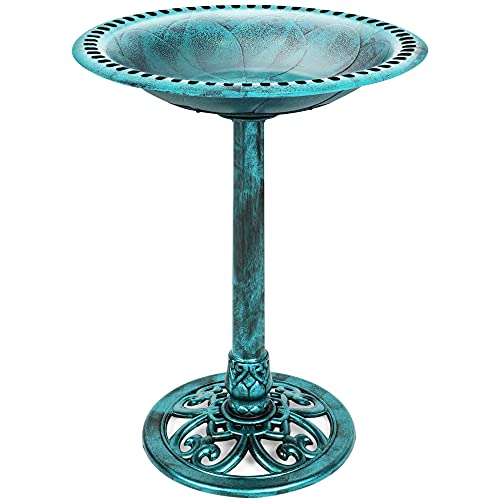
The Alpine Corporation TEC116 pedestal bath is a 28 inch tall resin pedestal with a scrollwork base and a basin wide enough for several birds to bathe at once. It is the buy-once pick: one purchase gives you a freestanding, no-hardware water station that works in a garden bed, a lawn corner or next to a feeding station.
Skip it if: Skip it if you only have a balcony or a hanging spot, since a pedestal bath needs a few square feet of level, open ground.
Alpine Corporation 25" Tall Outdoor Ceramic Antique

The Alpine 25-Inch Ceramic Pedestal Bath adds decorative bird figurines and a glazed ceramic finish for a yard that doubles as a garden centerpiece. It is the most refined option in the catalog and reads as a landscaping feature rather than a utility item.
Skip it if: Skip the ceramic pedestal if you live somewhere with hard freezes and no covered storage, since ceramic cracks more easily than resin or metal when water freezes inside it.
Also worth a look
Other listings in the same category, spread from budget to premium.


Where should a bird bath go in the yard?
Place a bath 10 to 15 feet from dense shrubs or a tree line. That gives bathing birds, which are briefly waterlogged and slow to fly, a quick escape route from cover, while staying far enough from the brush that a cat cannot ambush from hiding. Keep the bath itself clear of overhanging branches so leaves and droppings do not fall straight into the water.
Follow the same window rule that applies to feeders: a bath within 3 feet of glass or more than 30 feet away cuts down on collisions, according to American Bird Conservancy guidance, because birds either recognize the window is close or no longer perceive it as part of open sky. A spot 4 to 6 feet from the house, in partial shade for part of the day, keeps water cooler and slows algae growth.
If you already run a feeding station, put the bath a body length or two away rather than directly underneath a feeder, so hulls and droppings from the feeder do not blow straight into the basin.
Also think about sight lines from inside the house. Placing the bath somewhere visible from a kitchen window or a favorite chair adds none of the risk of a close feeder, since a stationary bath does not draw the fast, repeated flights that cause window strikes, but it does mean you actually see the activity you set the bath up for in the first place. A slightly raised spot, rather than a low corner behind other yard features, keeps the view open from both the bird's side and yours.
How deep should the water be?
Depth is the single biggest reason a bath goes unused. Most backyard songbirds want 1 to 2 inches of water, sloping from a shallow edge to a slightly deeper center, so a chickadee can wade in from the rim and a robin can stand comfortably in the middle. Anything deeper than about 3 inches at the center starts to exclude smaller birds entirely.
| Bird size | Comfortable water depth |
|---|---|
| Small songbirds (chickadees, finches, wrens) | 0.5 to 1.5 inches at the edge |
| Medium songbirds (cardinals, jays, robins) | 1.5 to 2.5 inches at center |
| Doves and larger birds | Up to 3 inches, with a flat standing area |
If your basin is naturally deeper than that, set a flat rock or two in the center. It gives birds a perch to stand on partway through the bowl and lets them control how deep they wade.
Pedestal, hanging, or ground bath: which one fits my yard?
A pedestal bath sits at a height that keeps birds visible from windows and out of easy reach of most ground predators, which is why it is the most common style for a first bath. A hanging bath saves yard space and works well on a deck rail or shepherd's hook, but it sways in wind, which some birds avoid. A ground-level bath, essentially a shallow dish set directly on soil or a garden bed, mimics a natural puddle and often draws in species like thrushes and sparrows that are wary of elevated perches.
There is no wrong answer here. Many yards do best with two: a pedestal or hanging bath near the main feeding area for regular visitors, and a low dish near ground cover for the more skittish species.
Does moving water bring in more birds?
Yes. The sound and motion of dripping or splashing water carries farther than visual cues and draws birds that would otherwise fly right past a still, silent basin. A small solar fountain pump, like the Mademax Solar Fountain Pump, drops into almost any existing basin and needs no wiring or battery changes since it runs directly off its own solar panel in daylight.
Moving water also slows down mosquito breeding, since standing water is what lets larvae mature, and a stirred basin evaporates and needs refilling a little faster, which is a reasonable tradeoff for a much livelier bath.
Should I keep a bird bath running through winter?
Birds need liquid water in cold weather just as much as in summer, and a frozen basin stops working entirely for drinking and bathing right when natural water sources also ice over. A dedicated heated bird bath, or a separate submersible or rock-style deicer added to an existing basin, keeps water open through freezing temperatures. Heated baths should hold no more than about 2 inches of water, since a shallow basin heats through faster and more evenly than a deep one, and a thin ice-free layer is all birds actually need to drink and bathe safely.
See our heated bird bath review and our heated bath versus bath heater comparison if you want to keep your existing pedestal or hanging basin working straight through the colder months rather than buying a second, dedicated winter unit.
How we chose
We did not test these bird baths in person. This roundup is built from published product specifications, manufacturer documentation and a wide read of verified owner reviews, cross-checked against wading and bathing depth guidance from wildlife agencies and bird conservation groups. Where a spec was not clearly published or consistent across listings, we left it out rather than guess.
Buying tips: what actually matters in a bird bath
Basin texture matters more than most buyers expect. Birds want grip, so a slightly gritty resin or stone-textured surface beats a glass-smooth glazed one, which can feel slick and unsafe underfoot to a bathing bird. Stability is next: a pedestal bath needs a wide, heavy base or ground stakes so it does not tip in wind, especially once it is full of water and top-heavy.
Cleaning ease should factor into the purchase, not just the price. A shallow, wide basin with no deep grooves scrubs clean in a minute, while an ornate figurine bath collects grime in its detail work. Plan to dump and scrub the basin every 2 to 3 days in warm weather to keep algae and mosquito larvae from building up, more often if you notice a film on the water. If you want the bath usable through freezing weather, see our heated bird bath and bath heater comparison before you buy, since retrofitting a heater into an existing basin is often cheaper than replacing the whole bath.
Finally, weigh material against your climate honestly before buying. Resin and cast stone tolerate a hard freeze left full of water far better than glazed ceramic, so if you cannot easily drain and store the bath before winter, lean toward the more forgiving material even if the ceramic option looks nicer on the shelf.
Get the one-page buying checklist
The three picks above, the placement distances and a cleaning schedule on one printable page.
Used only to send the checklist.Buy the picks
Prices move constantly; the button shows the current figure.
Frequently asked questions
How often should I clean a bird bath?
Scrub the basin every 2 to 3 days in warm weather, and daily if you notice algae film, droppings or mosquito larvae. A stiff brush and a plain water rinse handles most routine cleaning. For a deeper clean once every week or two, scrub with a diluted bleach solution, about 1 part bleach to 9 parts water, then rinse thoroughly and let the basin dry in the sun before refilling.
Should a bird bath sit in sun or shade?
Partial shade for part of the day is the best balance. Full sun heats water quickly and speeds up algae growth, while full shade keeps water cooler but dries more slowly and can attract more insects. A spot with morning sun and afternoon shade, or dappled light under a tree, keeps water fresher longer without going stagnant.
What is the best material for a bird bath?
Resin and cast stone are the most practical materials for most yards: they resist cracking through freeze and thaw cycles, are light enough to move for cleaning or winter storage, and cost less than ceramic or poured concrete. Ceramic and glazed pottery baths look more decorative but are more prone to cracking in hard freezes unless brought indoors for the season.
Can I put a bird bath near my feeders?
Yes, but leave a few feet of separation rather than placing the bath directly under a feeder. Seed hulls, shells and droppings from an overhead feeder will otherwise fall straight into the water and force you to clean it far more often. A bath a short distance away, within view of the feeding station, still gets visited by the same birds.
Do bird baths attract more birds than a feeder alone?
Water often outperforms food for pure visitation, since every bird needs to drink and bathe daily while many species only eat seed at certain times of year. Yards with both a feeder and a bath consistently report more species and more total visits than a feeder alone, because water draws in insect-eating and fruit-eating birds that never touch a seed feeder.